
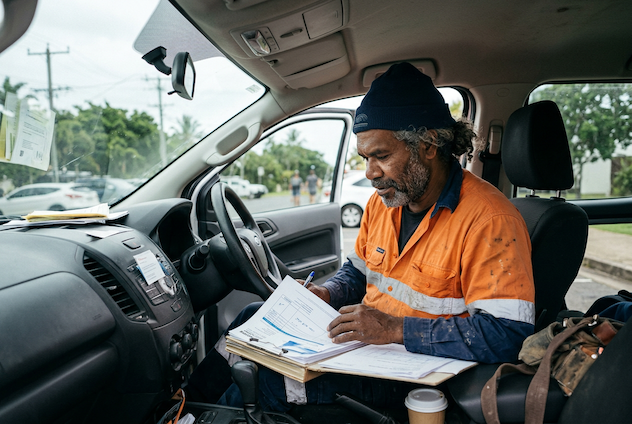
As a psychologist, much of my work is with people recovering from workplace injuries. Some arrive with a back that no longer lets them lift, a shoulder that ended a trade career, or a hand injury that changed how they work. Just as many arrive with no physical injury at all: what happened to them at work was psychological. That matches the national picture. Serious workers’ compensation claims for mental health conditions have risen 161 per cent over the past decade, the largest increase of any injury category, and now account for 12 per cent of all serious claims in Australia. In NSW, around 11 per cent of active workers’ compensation claims relate to a psychological injury, up from six per cent a decade ago.
Whatever form the injury takes, almost everyone has one thing in common: nobody warned them how much it would affect the rest of their life.
Psychological injuries are injuries
Bullying, harassment, exposure to traumatic events, occupational violence, and sustained unreasonable pressure can all cause psychological injury. These are not lesser injuries or grey areas: a psychological injury sustained at work is a workplace injury; it is recognised under the NSW scheme, and treatment is funded the same way as for a physical injury.
People with psychological injuries often face an extra layer of difficulty: their injury is invisible. There is no cast, no scar, no scan to point to. Many of my clients with psychological injuries spend energy justifying that they are injured at all, which is energy that should be going into recovery. The recovery road is also measurably longer: nationally, the median time lost for a mental health condition claim is 35.7 working weeks, almost five times the 7.4 weeks across all serious claims. Workplace harassment and bullying alone account for a third of these claims. All of which makes early, well-coordinated support even more important. If this is you, the starting point is simple: speak to your GP the same way you would for any other work injury.
What an injury disrupts
When someone is injured at work, the medical system responds to the injury. What it responds to less well is what happens around it: the income that becomes uncertain, the daily structure that disappears, the claims process that asks you to prove and re-prove what happened, and the slow shift in how you see yourself when you can no longer do the thing you have always done.
In therapy, the conversation is rarely about the injury itself, but rather what the injury took with it. Work gives most of us more than a wage. It gives a sense of routine, identity, social contact and a reason to get up at a set time. An injury interrupts all four at once, and that interruption has predictable psychological effects, including low mood, anxiety, poor sleep, irritability, and withdrawal from the people who would normally help.
The NSW regulator’s own data shows how much this side of recovery matters. People with a physical injury claim lose an average of six weeks of work. But people who need psychological services as part of recovering from a physical injury are off work for an average of 31 weeks, the worst outcomes of any group in the scheme. The psychological side of an injury is not a footnote to recovery. It often determines how it unfolds.
What I see most often
- Loss of identity: “I’m a builder” becomes “I was a builder.” For many people, especially those who have done one kind of work for decades, this is the hardest part of the injury.
- Guilt and self-blame: replaying the incident, feeling like a burden on family or workmates, or feeling judged for being off work.
- Claims stress: prolonged claims involve assessments, paperwork and decisions made by people you never meet. The uncertainty itself becomes a stressor, separate from the injury.
- The pain and mood cycle: persistent pain lowers mood, and low mood turns the volume up on pain. Each makes the other harder to treat alone, which is why psychological care is part of good pain management.
- Fear of reinjury: anxiety about going back, about the same thing happening again, or about not being able to keep up.
- Strain at home: partners can become carers, finances tighten, and the worker’s frustration lands on the people closest to them.
None of this necessarily means someone is coping badly. These are normal responses to an abnormal situation. But normal responses can still become entrenched, and the longer they run unaddressed, the more they get in the way of physical recovery as well.
What actually helps
Three things stand out from both the research and my own experiences as a psychologist supporting injured workers.
Early support changes trajectories. Psychological distress that is addressed in the first weeks after an injury tends to resolve at a much quicker and more consistent rate. The same distress left for a year becomes the primary problem. You don’t need to be in crisis to see a psychologist after an injury, and actually, the best time is before things feel unmanageable.
Treat the person, not the claim. Good treatment is about your recovery, your sleep, your relationships and your confidence, not just the boxes a claim requires. The claim is part of your context, but it is not the goal of therapy.
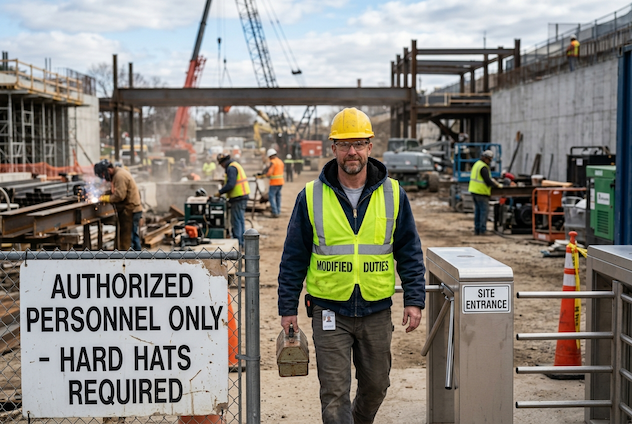
Return to work is part of treatment, done right. The evidence is consistent that good work is good for recovery, and that long absences make returning harder. But “done right” matters here. This includes graded, modified, planned with your treating team, and at a pace your recovery supports. A rushed return and an indefinitely delayed one are both risks.
When to reach out
Consider talking to your GP or a psychologist if, weeks after an injury, you notice:
- Your mood is consistently low, or you feel flat about things you used to care about
- You are anxious about work, the claim, or money most days
- Sleep has not returned to normal
- You are avoiding people or snapping at the people close to you
- You are replaying the incident or avoiding reminders of it
- Pain dominates more of your attention than it did a month ago
One or two of these, briefly, are part of recovery. A pattern that persists for weeks is a signal worth acting on.
How Mind-Care can help
Mind-Care provides workers’ compensation psychology under the NSW scheme. Our psychologists are SIRA-approved and work alongside your GP, insurer and rehabilitation provider, in person at our Charlestown clinic or by telehealth anywhere in NSW. If you are recovering from a workplace injury, physical or psychological, you can request an appointment online or ask your GP about a referral.
FAQ
Can I see a psychologist through my workers’ compensation claim?
Yes. Psychological treatment is covered under the NSW workers’ compensation scheme when approved by the insurer managing your claim, and is usually arranged through your treating doctor.
Is it normal to feel depressed after a work injury?
Low mood after an injury is common and understandable, given what an injury disrupts. If it persists for weeks or starts affecting sleep, relationships or recovery, it is worth treating in its own right.
Do I need a physical injury to make a workers’ compensation claim?
No. Psychological injuries sustained at work are recognised under the NSW scheme. Speak to your GP as a first step.
Can workers’ compensation psychology sessions be conducted via telehealth?
Yes, where clinically appropriate. Telehealth makes ongoing treatment feasible if you live in a remote area or are balancing modified duties.